Hollands Glorie: How Procona Grew from an Attic Room to 25 Countries
In 2011, Dutch business magazine MTSprout profiled Pagter Innovations in their "Hollands Glorie" series — a column celebrating small Dutch companies with world-class products. The article captures a pivotal moment in Procona's history: a 26-person company already exporting to 25 countries and selling five million units per year.
In October 2011, Dutch business magazine MTSprout featured Pagter Innovations in their "Hollands Glorie" (Dutch Glory) series — a recurring column celebrating small Dutch companies that have created world-class products. The article, written by Rob van Leeuwen, captures a fascinating snapshot of Procona at a pivotal moment in its history: already a global player, but still very much a family-grown enterprise rooted in Dutch ingenuity.
The original article was published in Dutch on MTSprout.nl. You can read it here: Hollands Glorie — Procona.
Below is our English review and summary of the article, including all key quotes translated from the original Dutch. For the Procona community — growers, retailers, and logistics professionals around the world — this piece offers a rare behind-the-scenes look at the company's origins and the philosophy that has driven its success for over three decades.
From an attic room to 25 countries
The article opens with the tagline that defines the series: "Small country, world product." And then it gets specific: Pagter Innovations' packaging systems transport cut flowers as efficiently as possible — to 25 countries.
As the article tells it, the story begins in the early 1990s. Jan de Pagter, a horticultural engineer, was working at the Flower Auction in Naaldwijk, Netherlands, when he noticed a persistent problem: cut flowers were not surviving the journey to the customer in good condition. The culprit was a lack of water and proper ventilation during transport.
"Bloemen mogen dan van mensen houden, dat zorgt er nog niet voor dat ze altijd in de beste staat bij die mensen terecht komen."
Translation: "Flowers may love people, but that does not mean they always arrive at those people in the best condition."
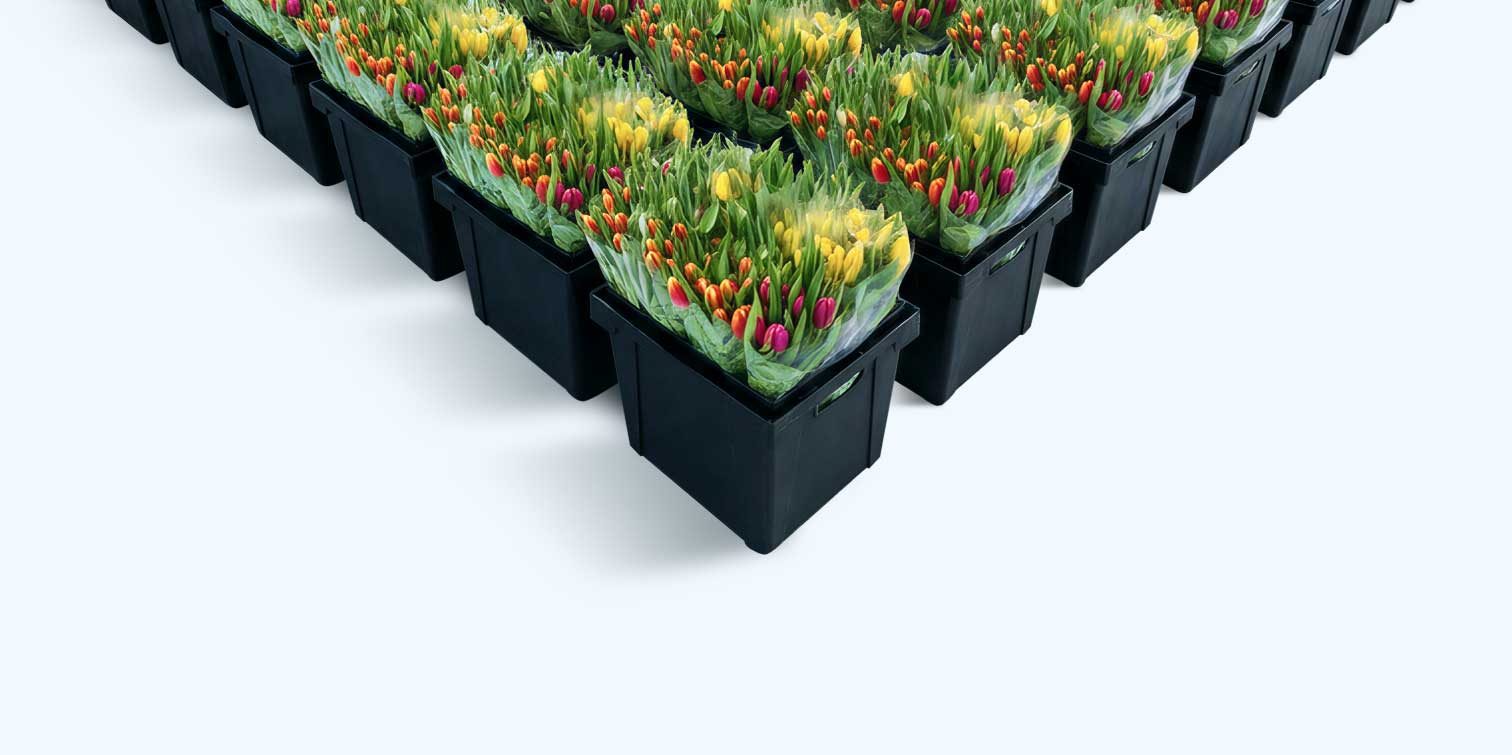
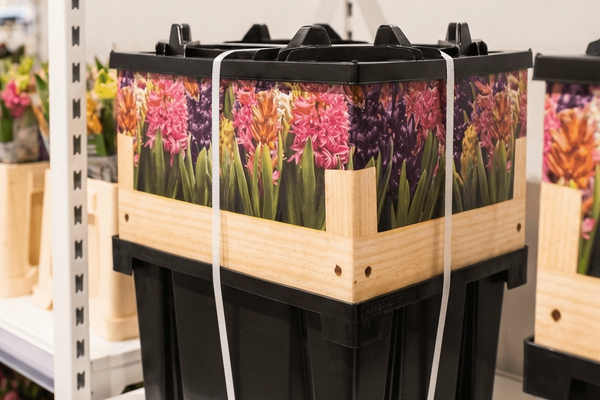
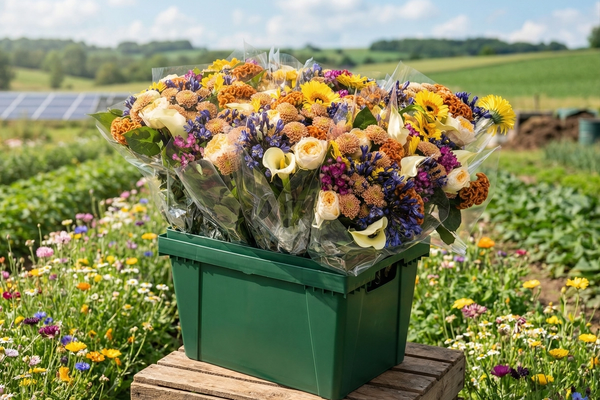
Working from his attic room, De Pagter developed the first version of a new packaging system. He named it Procona — derived from the slogan "PROduction to CONsumer in Aqua." The concept was elegantly simple: a plastic container that holds cut flowers in water, wrapped with a cardboard collar for protection, topped with a lid that provides ventilation while making the unit stackable.
Together with his wife Lia, De Pagter brought the product to market in 1992 under the company name Pagter Innovations — still operating from that attic room. A year later, their daughter Corina joined the business to handle sales. It was a true family enterprise in every sense.
And then the growth came — fast. Particularly from international markets. By the time MTSprout profiled the company in 2011, Pagter Innovations was exporting to 25 countries, with approximately 80 percent of revenue coming from abroad. The company was selling around five million Procona units annually.
The attic room was long gone. The article describes a company of 26 employees operating from Roosendaal, with production facilities in America and Italy, a sales office in Japan, and agents in Russia and Spain. For a company that started as a one-man invention project, the global reach was remarkable.
Two test rooms and a cold storage cell
The article provides a fascinating glimpse into Procona's engineering culture. By 2011, Loes van der Toolen had replaced Jan de Pagter (then 66 years old) as managing director. Her quote captures the hidden complexity of the product:
"In de details zie je de pas hoe ingenieus de Procona in elkaar zit."
Translation: "It is only in the details that you see how ingeniously the Procona is put together."
The article mentions specific engineering innovations for improved stability and faster drying after cleaning — two practical concerns that matter enormously in real-world flower logistics but are easy to overlook from the outside.
Quality control was taken seriously even at this relatively early stage. Pagter Innovations maintained two test rooms and a cold storage cell where real-world shipping conditions were simulated. The company employed two full-time engineers on the R&D team, working alongside Jan de Pagter himself, who at the time still dedicated two days per week to innovation.
More than a product: the business case for Procona
One of the most compelling sections of the article deals with how Pagter Innovations positioned itself not merely as a packaging supplier, but as a logistics advisor. Loes van der Toolen puts it directly:
"We zijn meer adviseur dan verkoper."
Translation: "We are more advisor than seller."
The article explains that Pagter Innovations works with customers to calculate exactly how many containers are needed in their specific supply chain. This consultative approach — helping customers model their logistics rather than simply pushing product — remains a defining characteristic of the company to this day.
On the economics, the article is refreshingly direct. A Procona costs more than a standard plastic bucket, but the price difference is quickly recovered through three mechanisms:
Better flower quality
"Door het ventilatiesysteem blijft temperatuur laag, zodat minder schimmel- en bacterievorming optreedt."
Translation: "Thanks to the ventilation system, temperature stays low, resulting in less mold and bacteria formation." Flowers arrive in better condition because the Procona system manages airflow, temperature, and hydration simultaneously — something no open bucket or sealed cardboard box can do.
Reusability and waste reduction
"Alleen de kartonnen kraag wordt weggegooid, de rest is herbruikbaar. Na 3 keer rouleren heb je de investering er al uit."
Translation: "Only the cardboard collar is discarded — the rest is reusable. After 3 rotations, you have already recovered the investment." This is a remarkable ROI claim: break-even after just three uses, with 80-100+ cycles remaining. The economics only improve from there.
Transport efficiency
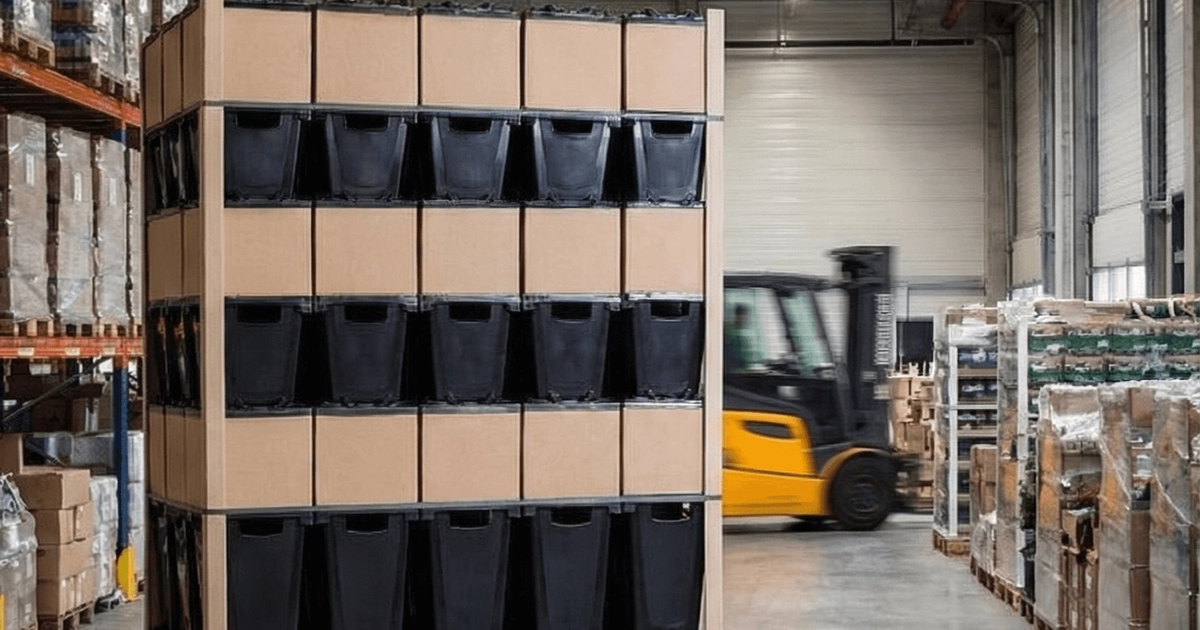
"Door het slimme stapelsysteem kan gemiddeld 25 procent meer bloemen op een pallet."
Translation: "Thanks to the clever stacking system, an average of 25 percent more flowers can fit on a pallet." This is the rectangular advantage — the core geometric insight that makes Procona fundamentally more efficient than round buckets. In 2011, as today, that 25% figure translates directly into fewer trucks, lower shipping costs, and reduced carbon emissions.
Retail presentation
The article also highlights the display systems as a revenue driver for retailers. Van der Toolen shares a telling anecdote:
"Een grote Engelse supermarktketen vertelde me dat de omzet daardoor flink is gestegen."
Translation: "A large English supermarket chain told me that their revenue increased significantly because of it." This refers to Procona display units in-store, which allow flowers to be presented attractively while staying fresh in water — driving impulse purchases and repeat business.
Today, Procona's retail display systems include the Madeira, Pico, and Bali models. Explore our display systems.
Supermarkets, e-commerce, and the Dutch market
The article describes an interesting strategic evolution. Pagter Innovations initially focused on growers and florists — the production and specialist retail end of the supply chain. By 2011, the focus had shifted to supermarkets. Van der Toolen listed their wins:
"In Engeland doen drie grote ketens alle verpakkingen via ons, daarnaast werken we samen met supermarkten in Tsjechië, Polen, Hongarije, Portugal, Oostenrijk."
Translation: "In England, three large chains handle all their packaging through us. Additionally, we work with supermarkets in the Czech Republic, Poland, Hungary, Portugal, and Austria." That level of supermarket penetration in 2011 — years before sustainability became a mainstream retail concern — speaks to the strength of the economic and quality arguments alone.
The article also identifies e-commerce with digital florists as a growth market — remarkably prescient for 2011, when online flower delivery was still in its early stages. This market has since exploded, and Procona's Porto line has become a key product for the last-mile delivery segment.
The Netherlands: the toughest market
Perhaps the most surprising revelation in the article is that the Netherlands — the world's flower industry capital — was one of Procona's most challenging markets. The reason? The Dutch auction system uses its own proprietary transport containers ("veilingfusten"), creating an entrenched infrastructure that resists change.
But Van der Toolen saw the opportunity clearly:
"Voor een grote handelaar hebben we uitgerekend wat er bespaard kan worden met onze systemen. De uitkomst deed zelfs ons schrikken, dus bij Nederlandse bloemenexporteurs verwacht ik nog flinke groei."
Translation: "For a large trader, we calculated what could be saved with our systems. The outcome even shocked us, so I expect significant growth among Dutch flower exporters." The fact that the savings calculation surprised even Pagter Innovations suggests the efficiency gap between traditional auction containers and the Procona system is enormous.
What this article tells us about Procona today
Reading this 2011 profile through the lens of 2026, several things stand out:
The core product has not changed. The Procona system described in 2011 — container, collar, lid, ventilation, stackability, water retention — is fundamentally the same system sold today. That is not stagnation; it is proof that the design was right from the beginning. When something works this well, you do not change it.
The company philosophy endures. "We are more advisor than seller" is still how Pagter Innovations operates. The consultative approach — calculating logistics savings for individual customers, modeling supply chain efficiency — remains central to how Procona is sold.
The 25% transport advantage is timeless. The rectangular geometry that saves 25% on pallet loading is a mathematical fact, not a marketing claim. It was true in 2011 and it is true today. Physics does not change.
The ROI acceleration has only improved. If break-even was three rotations in 2011, it is likely even faster today given rising material costs, increasing waste disposal fees, and tightening sustainability regulations. The economic case for reusable packaging has only gotten stronger.
From 25 countries to a global standard. The 2011 article describes exports to 25 countries. Today, Procona is used across the world's major flower markets. The trajectory that MTSprout captured was just the beginning.
About "Hollands Glorie"
MTSprout's "Hollands Glorie" (Dutch Glory) series profiles small Dutch companies that have created products with global impact. Being featured in this series places Procona alongside other innovative Dutch enterprises that punch well above their weight on the world stage — a fitting recognition for a company that turned an attic-room invention into an international standard.
Read the original Dutch article on MTSprout: Hollands Glorie — Procona.
The Procona story continues
The company Jan de Pagter built from his attic room in the early 1990s is still innovating. Explore the complete Procona product line to see how far the system has come, or read the full Procona journey from founding to global standard.