How to Use Procona: The Complete Visual Guide to Reusable Flower Buckets
Watch the official Pagter video walkthrough of the Procona system and learn exactly how each component works together to transport and present cut flowers from farm to shelf.
Procona is the most widely used reusable flower bucket system in the world, trusted by growers, exporters, distributors, and retailers across every major flower market. But if you are new to the system, or considering making the switch from single-use packaging, you might be wondering: how does it actually work in practice?
In this article, we walk through the complete Procona system step by step, accompanied by the official Pagter video demonstration. Whether you are evaluating Procona for your operation or training new team members, this is your go-to visual reference.
Watch: How to use Procona
This official video from Pagter demonstrates the complete Procona workflow, from filling the bucket with water and loading flowers, to stacking on pallets, transporting, and presenting in retail. Watch the full walkthrough below.
The video covers every stage of the Procona journey. Let us break down each step in detail.
Step 1: The Procona bucket
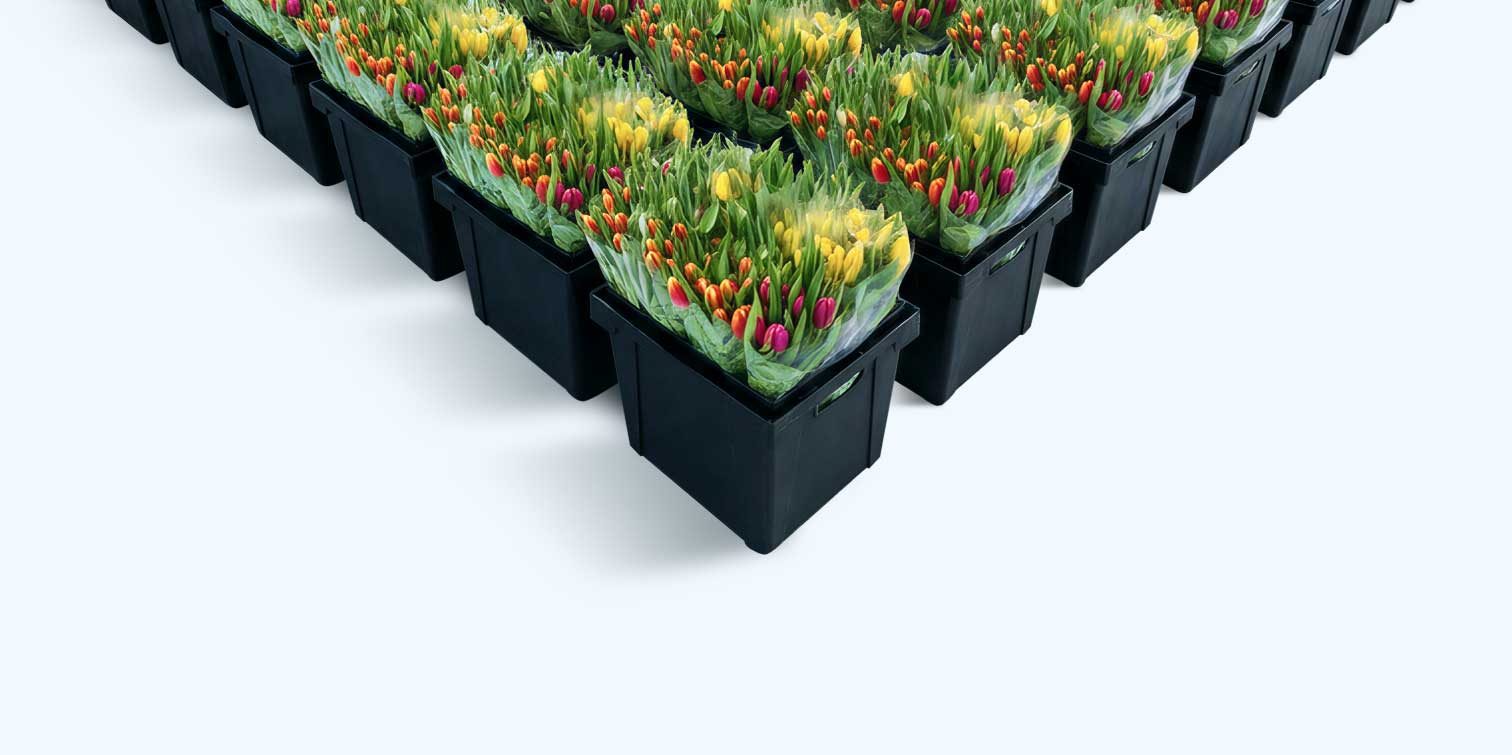
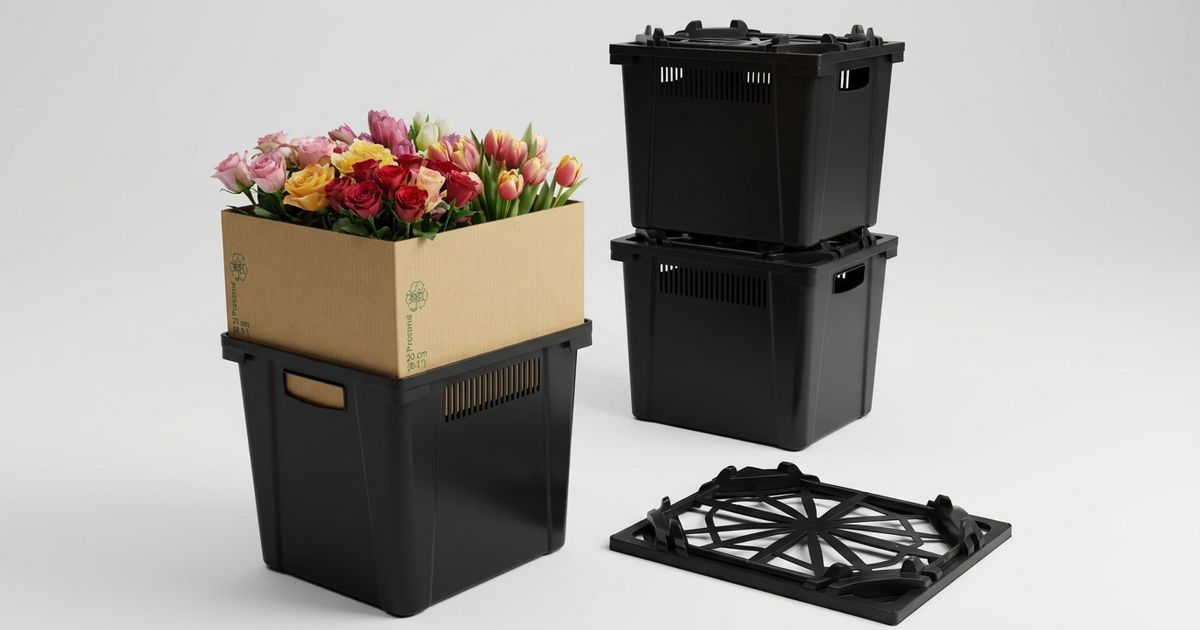
Everything starts with the bucket itself. The Procona container is a rectangular, water-tight bucket made from durable polypropylene with up to 50% recycled content. Unlike round buckets that waste space on pallets, the rectangular design means every square centimeter of pallet space is used efficiently.
The bucket is filled with clean water before flowers are loaded. This is the foundation of the Procona promise: flowers stay in water from the moment they are cut at the farm until they reach the consumer. Continuous hydration is the single most important factor in flower freshness and vase life.
Explore the full range of Procona bucket models, including Valencia, Amsterdam, London, and Florida, each designed for different parts of the supply chain.
Step 2: Adding the collar
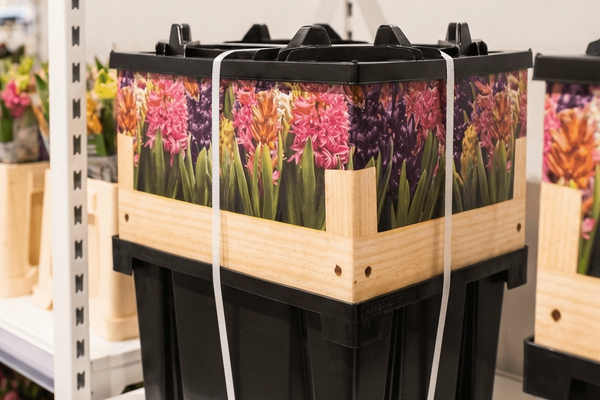
Once the bucket is filled with water and flowers are placed inside, the collar goes on top. The collar is a protective ring that serves multiple critical functions in the system.
First, it supports the flower stems, keeping them upright and preventing them from shifting during transport. This mechanical protection is essential for delicate blooms like roses, gerberas, and lilies that are easily damaged by movement.
Second, the collar prevents flowers from being crushed by adjacent containers or loads stacked on top. Think of it as a protective cage for the most valuable part of your shipment.
- Available in cardboard (single-use, FSC-certified) or plastic (approximately 50 reuses)
- Multiple heights: 18cm, 25cm, and 35cm to accommodate different stem lengths
- Can be printed with your company branding (minimum order applies)
Learn more about collar options and customization on our accessories page.
Step 3: Securing with the lid
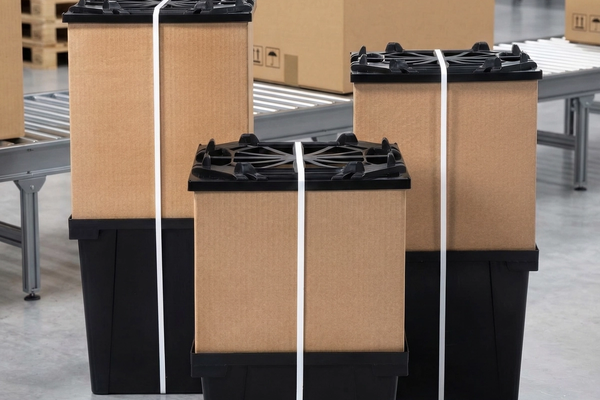
The lid is where the Procona system really comes together as an integrated logistics solution. It snaps onto the bucket with locking nubs that ensure a secure, stable stack. But it does much more than just close the container.
The lid features ventilation openings that allow controlled air circulation even when containers are fully stacked on a pallet. This is crucial because flowers continue to respire after cutting. Without ventilation, heat and ethylene gas build up, accelerating aging. Without the lid, water evaporates and flowers dehydrate. Procona balances both perfectly.
Another key feature: the lid allows visual inspection of the flowers without opening the container. Quality control teams at distribution centers and retail receiving docks can verify product condition at a glance, saving time and reducing unnecessary handling.
Step 4: Stacking and pallet loading
As shown in the video, loaded Procona containers stack cleanly and securely on standard Euro pallets (120 x 80cm) and block pallets. The interlocking lid design ensures stability during transport, even over long distances and rough roads.
The stacking stability is so reliable that you can place heavy non-flower products on top of a loaded Procona pallet. In supermarket distribution centers, it is common to see crates of beer, bags of potatoes, or other heavy goods stacked directly on top of flower pallets. The rigid Procona construction handles it without any compression or damage to the flowers below.
This pallet efficiency directly impacts your bottom line. Fewer pallets mean fewer trucks, less fuel, lower transport costs, and reduced carbon emissions. For operations shipping across continents, from farms in Kenya or Colombia to auction houses in the Netherlands, these savings are enormous.
Step 5: From transport to retail display
One of the most powerful aspects of the Procona system is that the same container used for shipping can go directly onto the retail floor. There is no need to unpack flowers and transfer them into separate display containers. This retail-ready approach eliminates an entire step in the supply chain.
Procona containers fit directly into purpose-built display systems: the Madeira for large floral departments, the Pico for compact spaces, and the Bali for counter displays. See our retail solutions for the complete range.
- No repacking means less handling damage and faster shelf setup
- Flowers stay in water continuously, arriving fresher for the consumer
- Clean, professional presentation with no water spillage on the retail floor
- Rectangular containers maximize display space per square meter
- The system handles peak sales periods like Valentine's Day and Mother's Day with ease
Step 6: The return journey and circular lifecycle
After the flowers are sold, the empty Procona containers begin their return journey. They go back to the distribution center, then to a cleaning facility (or are cleaned on-site with automatic washing machines for high-volume operations), and then re-enter the supply chain ready for the next load of flowers.
This circular model is what makes Procona fundamentally different from any single-use packaging. A disposable cardboard box has one life. A Procona container has 80 to 100 or more lives. That means the environmental impact and the cost per use decrease with every cycle.
Read more about our sustainability story and lifecycle analysis.
Which Procona model is right for your operation?
As shown in the video, the core Procona workflow is the same across all models. But different parts of the supply chain have different needs. Here is a quick guide to choosing the right model.
Getting started with Procona
If you are considering Procona for your operation, the process is straightforward. Our team will help you assess your current logistics setup, recommend the right container mix, calculate your specific ROI, and plan a phased rollout that minimizes disruption.
Most operations see a positive return on investment within the first year. The combination of transport savings, reduced flower waste, labor efficiencies, and elimination of ongoing packaging purchases adds up quickly.
Get in touch with our team for growers to start the conversation, or explore our solutions for retailers and distributors.